Redis

3 posts in this section

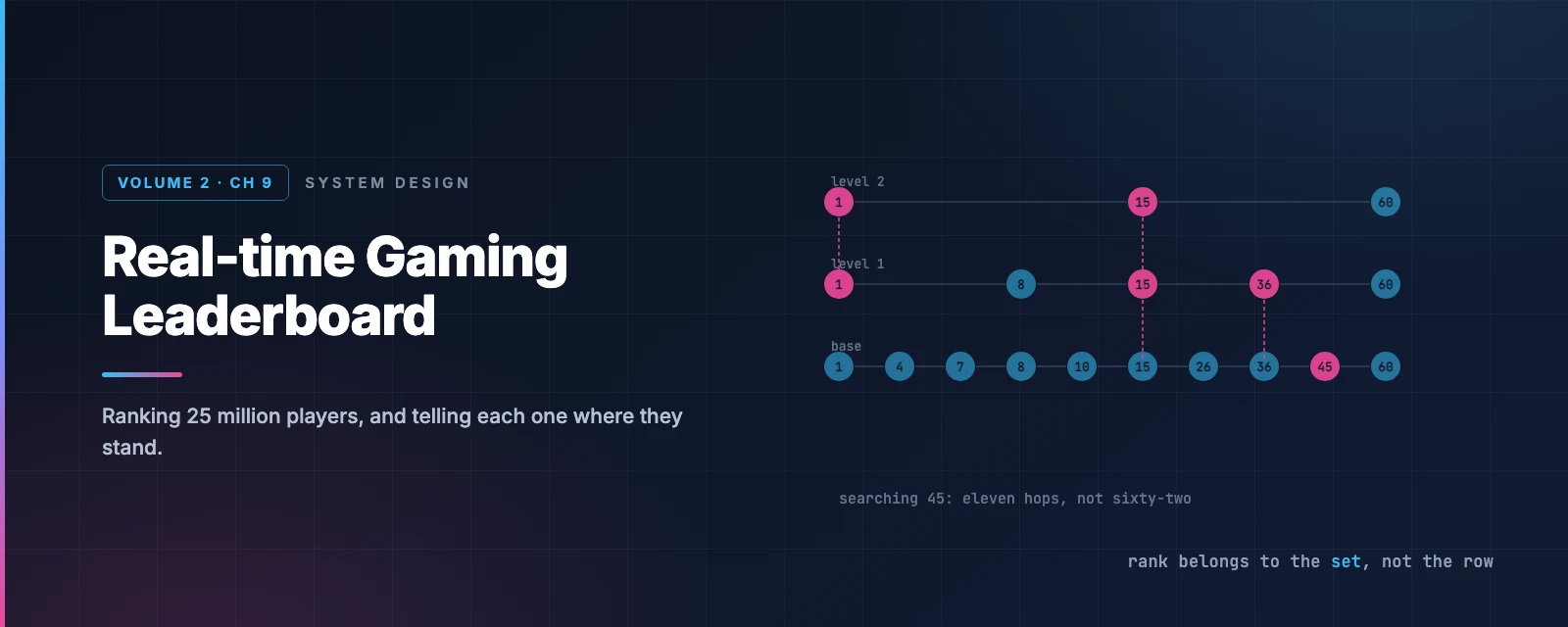
Design a Real-time Gaming Leaderboard

“Show me the top 10 players, and tell me where I rank.”

Two sentences. They sound like the same problem and they are not, and the second one is why this design exists.

Finding the top 10 of anything is easy — you keep a small heap. But telling one player they are #4,328,911 out of 25 million, updated in real time as everyone else keeps scoring, is a genuinely hard query. There is no shortcut: to know someone’s rank you have to know how many people are ahead of them, which means knowing about everyone.

Continue reading »
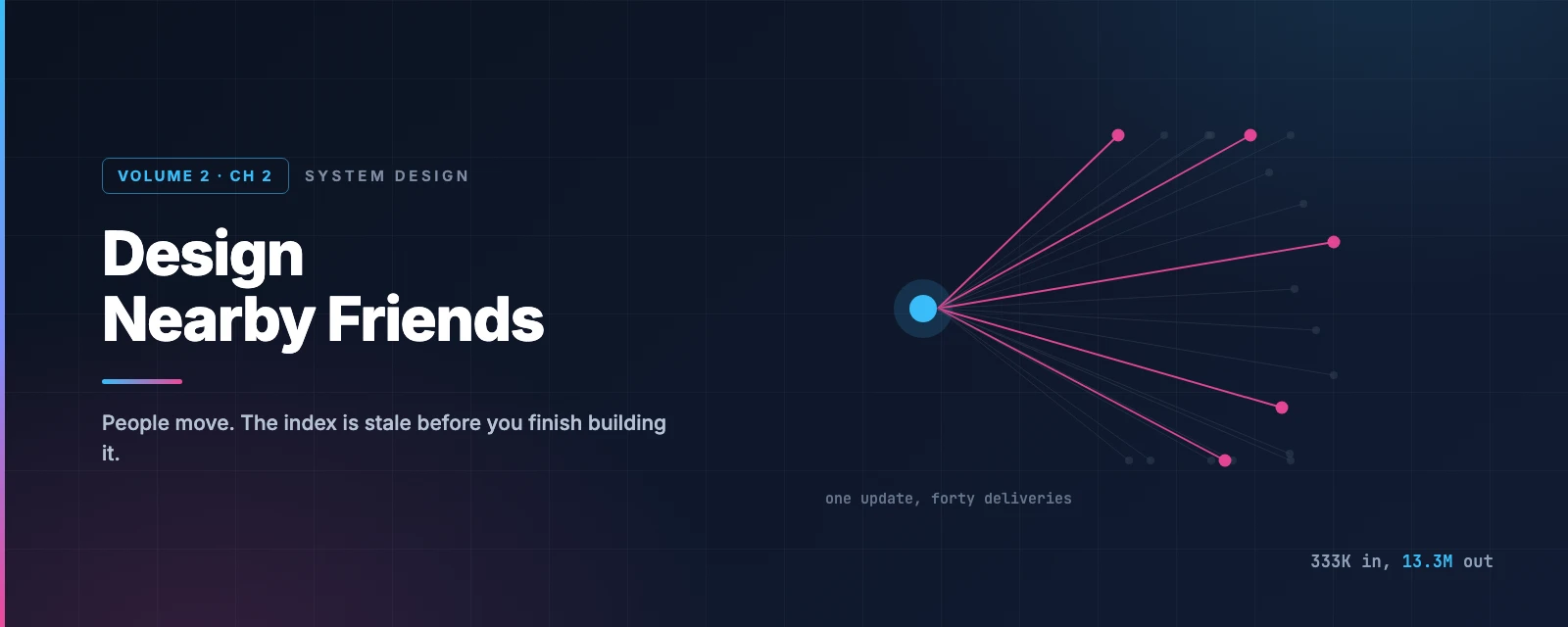
Design Nearby Friends

In the last chapter we found restaurants near you. This one looks almost identical — find friends near you — and it is a completely different problem.

Restaurants do not move. A restaurant’s location is written once and read a billion times, which is why that design could precompute an index, cache it globally, and rebuild it overnight.

People move. Every user is emitting a new location every thirty seconds, and every one of those updates has to reach a few hundred other people right now. The index is obsolete before you finish building it.

Continue reading »

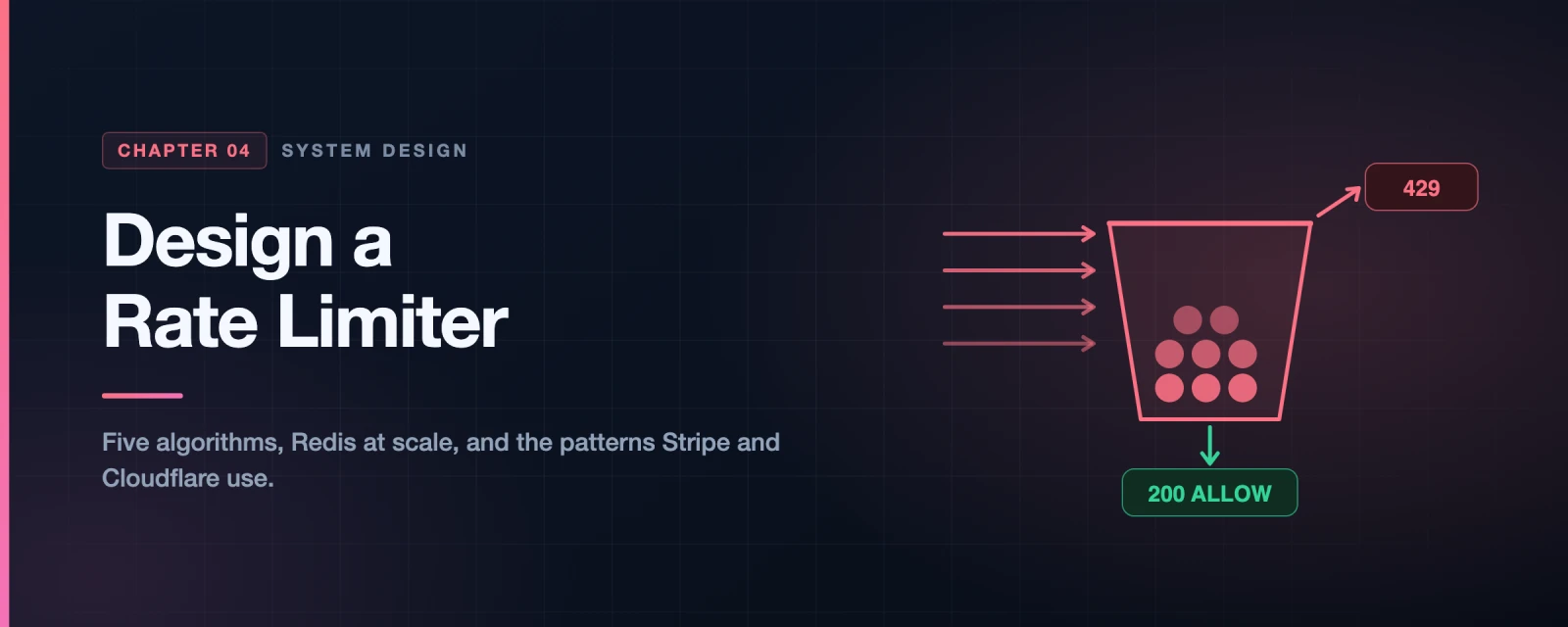
Design a Rate Limiter

It’s 11:59 PM on Black Friday. Your e-commerce platform has been running smoothly all day. Then at midnight, 500,000 shoppers simultaneously hammer your /checkout API. Your servers start queuing requests. Then they start dropping requests. Then they crash. Every second of downtime costs thousands of dollars in lost sales.

Meanwhile, a competitor’s site — running the exact same infrastructure — handles the load just fine. The difference? They had a rate limiter.

Continue reading »