Databases

5 posts in this section

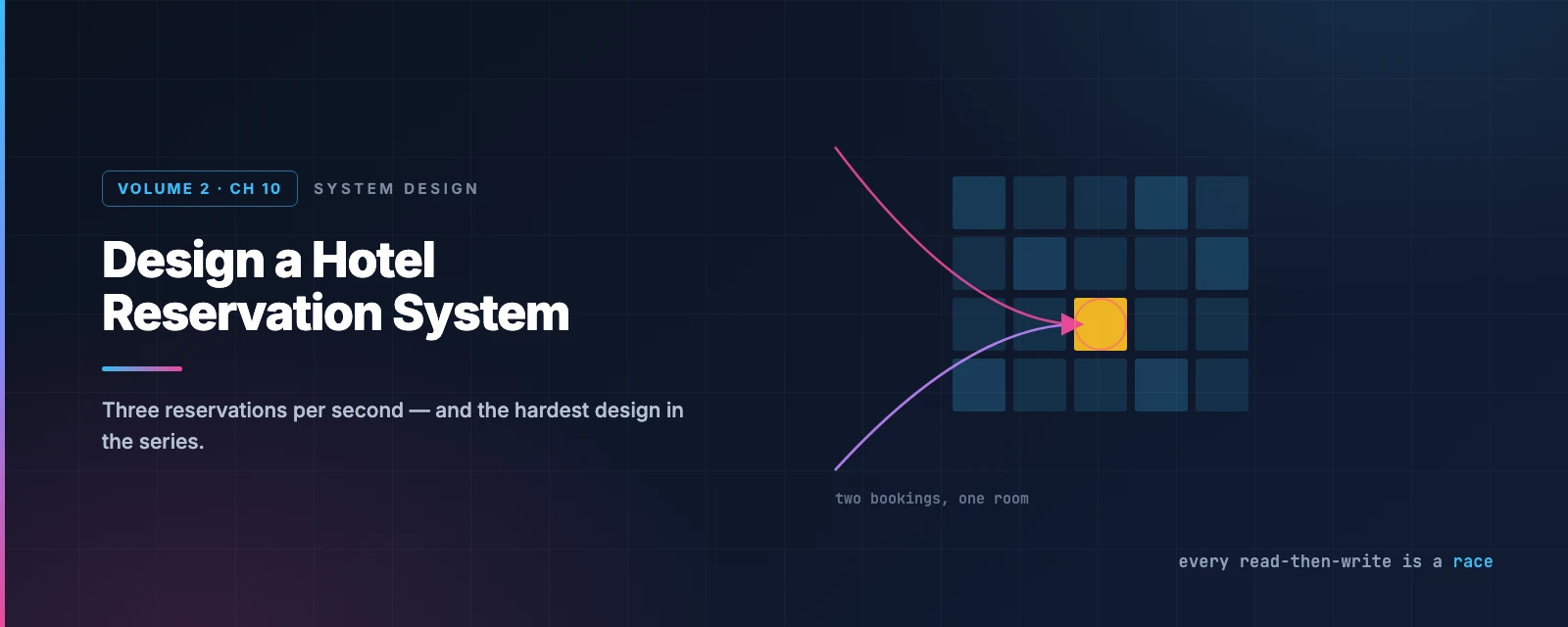
Design a Hotel Reservation System

Here is the entire scale of this system:

5,000 hotels · 1 million rooms
240,000 reservations per day
= 3 reservations per second

Three per second. A Raspberry Pi could serve that. Every other design in this series has been about surviving volume — 13 million messages a second, 50,000 clicks a second, 100 petabytes of map tiles. This one has none of that.

And it is arguably the hardest.

Because for the first time, being slightly wrong is not acceptable. A dropped metric leaves a gap in a chart. A duplicated ad click costs someone money and gets fixed at reconciliation. But selling the same hotel room to two people is a real person arriving at midnight to find no room, and there is no batch job that fixes that.

Continue reading »
Design a Proximity Service

You open Yelp and tap restaurants near me.

Under a second later, you have a ranked list. Somewhere behind that tap, a system just searched 200 million businesses, found the handful within 500 metres of you, sorted them by distance, and shipped them back — while doing the same thing for a few thousand other people that second.

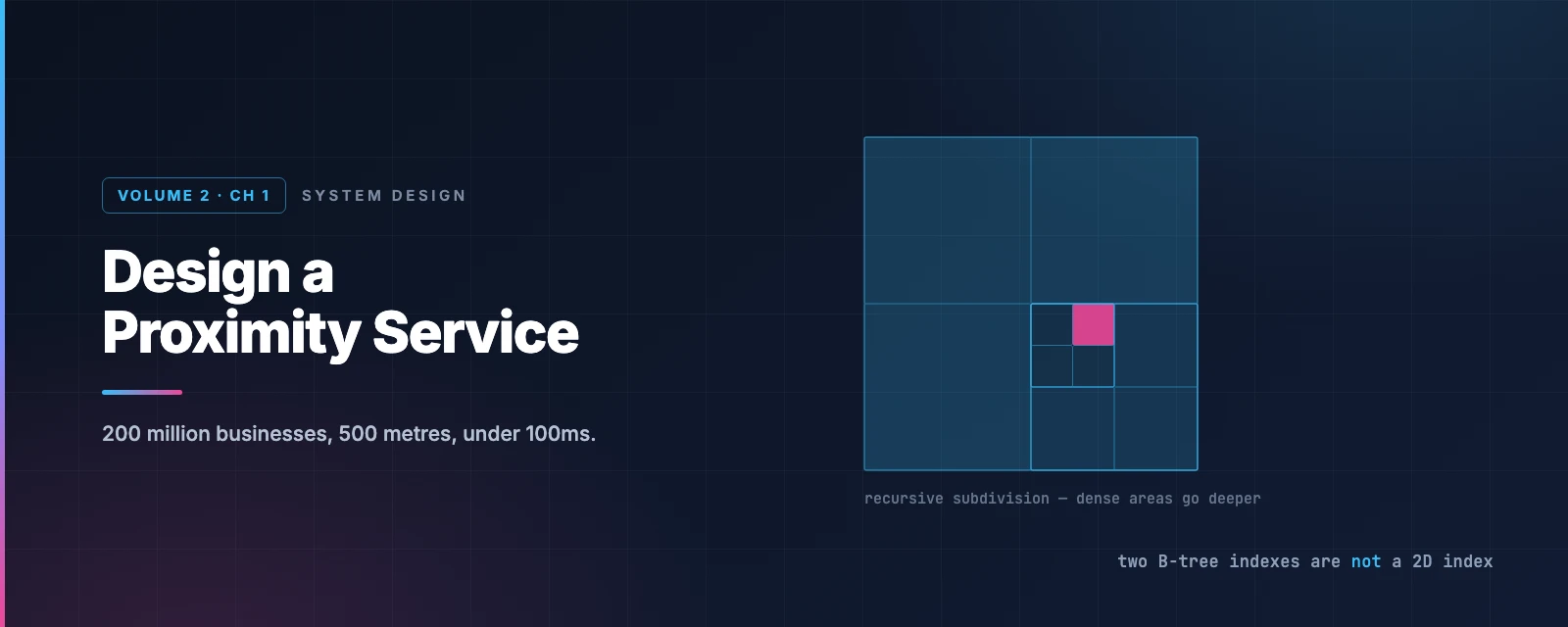
The obvious implementation is a WHERE clause on latitude and longitude. It does not work, and why it does not work is one of the more interesting failures in system design: the query is perfectly indexable in each dimension separately, and that turns out to be useless.

Continue reading »

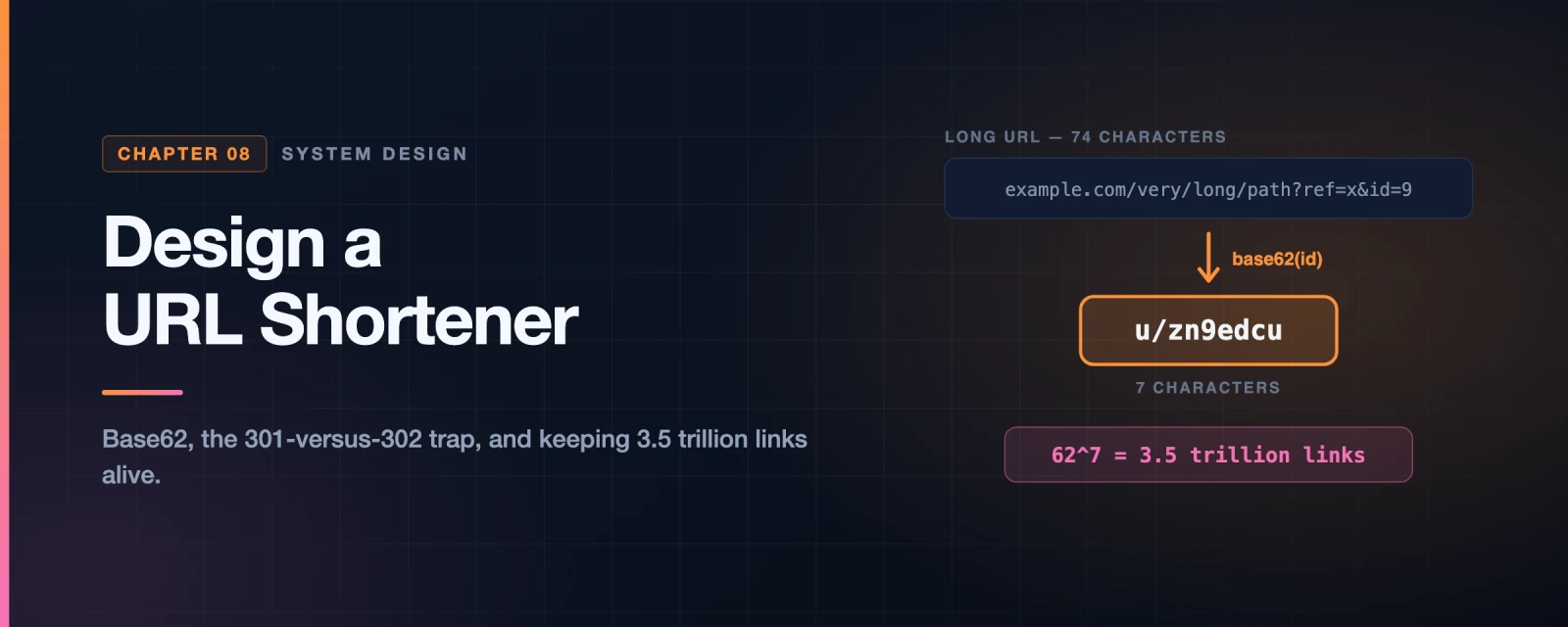
Design a URL Shortener

A URL shortener looks like the easiest system design question you will ever get. Store a mapping, hand back a short string, redirect. You could write it in an afternoon.

That is exactly why it gets asked. The naive version really is trivial — so the interview is not about whether you can build it. It is about whether you notice the four decisions hiding inside the triviality:

  1. How short can the code be? Not a guess — an arithmetic answer from the traffic estimate.
  2. How do you generate the code? Hash the URL, or encode a counter? They fail in completely different ways.
  3. 301 or 302? One of these silently destroys your analytics and makes links impossible to change. Most candidates pick it.
  4. What stops your service becoming a phishing tool? Every real shortener spends more engineering effort here than on the shortening.

We will build it properly, in the order an interviewer expects, and then cover the production concerns the textbook treatment leaves out.

Continue reading »

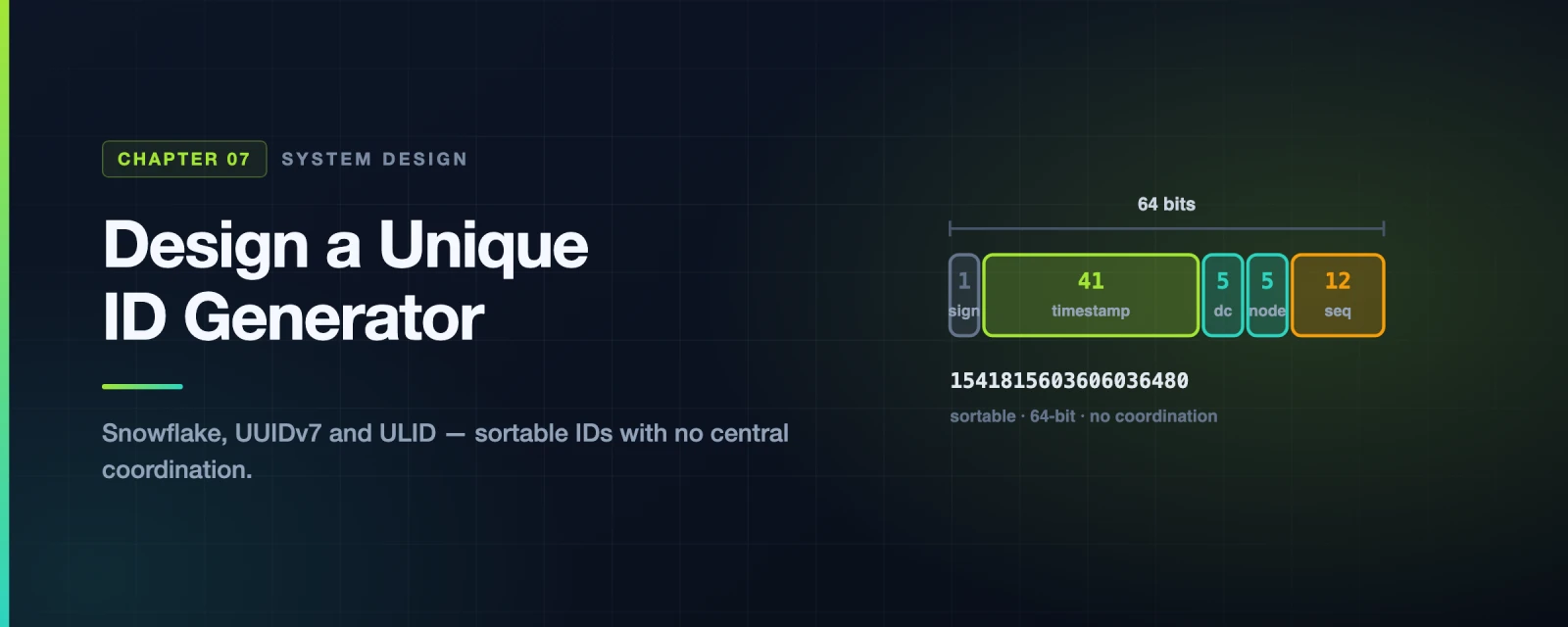
Design a Unique ID Generator in Distributed Systems

Every row in your database needs a name. For years that name came from one line of SQL:

CREATE TABLE orders (
  id BIGINT PRIMARY KEY AUTO_INCREMENT,
  ...
);

The database hands out 1, 2, 3, 4. They are unique, they are sortable, they are small. It is a solved problem — right up until the moment you have two databases.

Then it stops working, quietly and catastrophically. Both databases happily hand out ID 1. Two different orders, same identifier. Your foreign keys now point at the wrong rows, and no error was raised anywhere.

Continue reading »

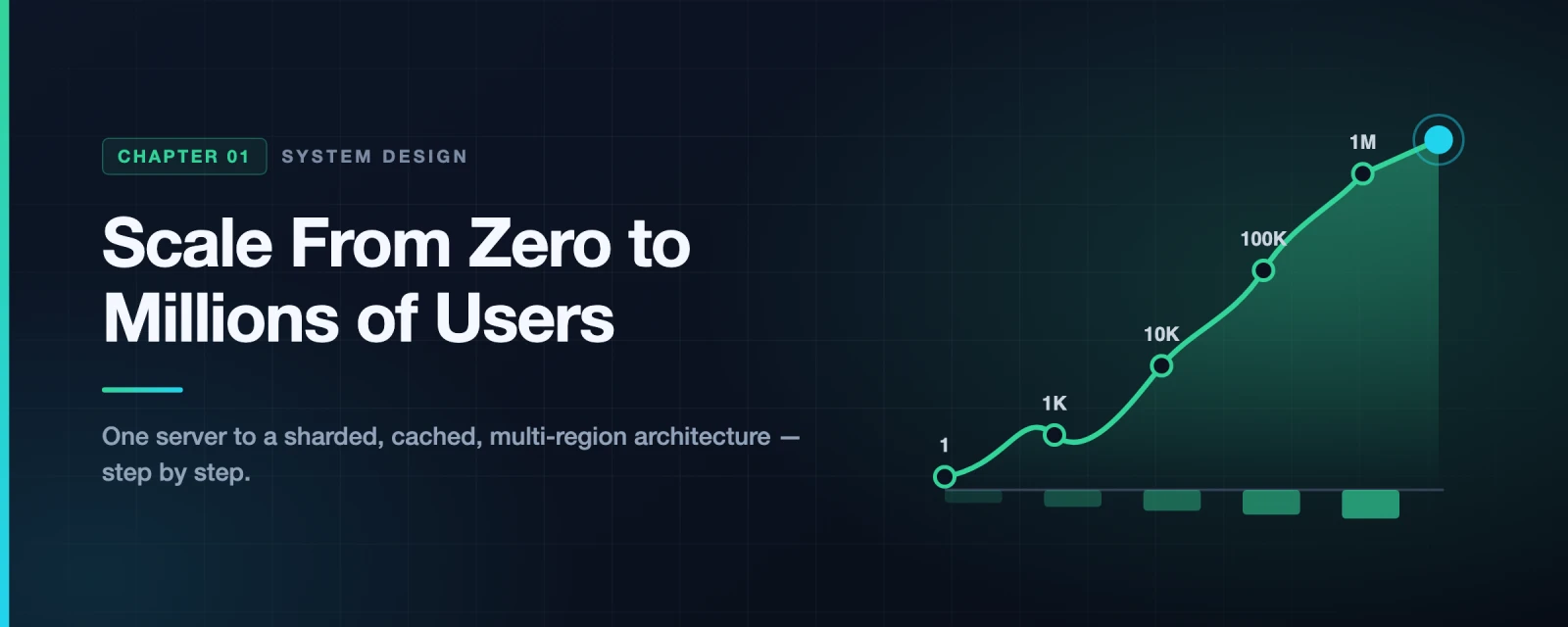
Scale From Zero to Millions of Users: A Complete System Design Walkthrough

Designing a system that supports millions of users is challenging — it is a journey that requires continuous refinement and endless improvement. In this post, we build a system that supports a single user and gradually scale it up to serve millions of users. After reading this, you will master a handful of techniques that will help you crack system design interview questions.

A journey of a thousand miles begins with a single step. Building a complex system is no different.

Continue reading »