Caching

7 posts in this section

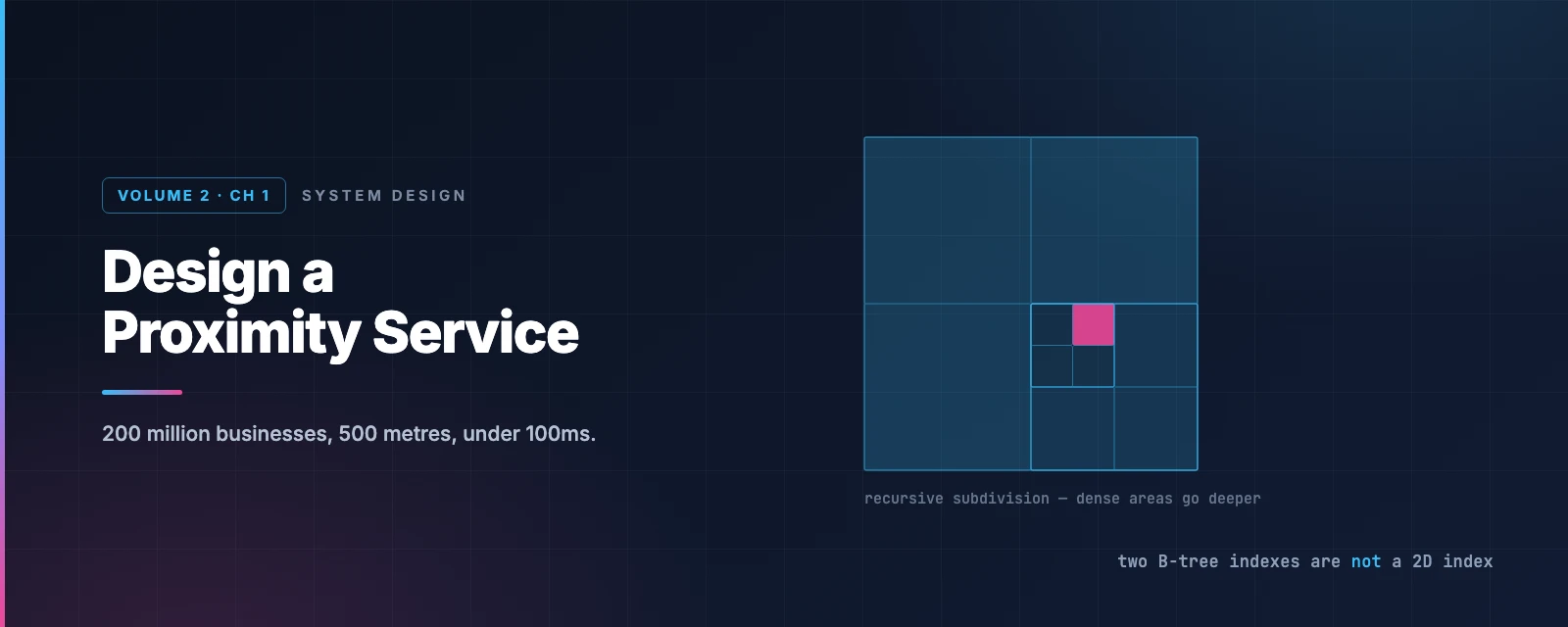
Design a Proximity Service

You open Yelp and tap restaurants near me.

Under a second later, you have a ranked list. Somewhere behind that tap, a system just searched 200 million businesses, found the handful within 500 metres of you, sorted them by distance, and shipped them back — while doing the same thing for a few thousand other people that second.

The obvious implementation is a WHERE clause on latitude and longitude. It does not work, and why it does not work is one of the more interesting failures in system design: the query is perfectly indexable in each dimension separately, and that turns out to be useless.
Continue reading »

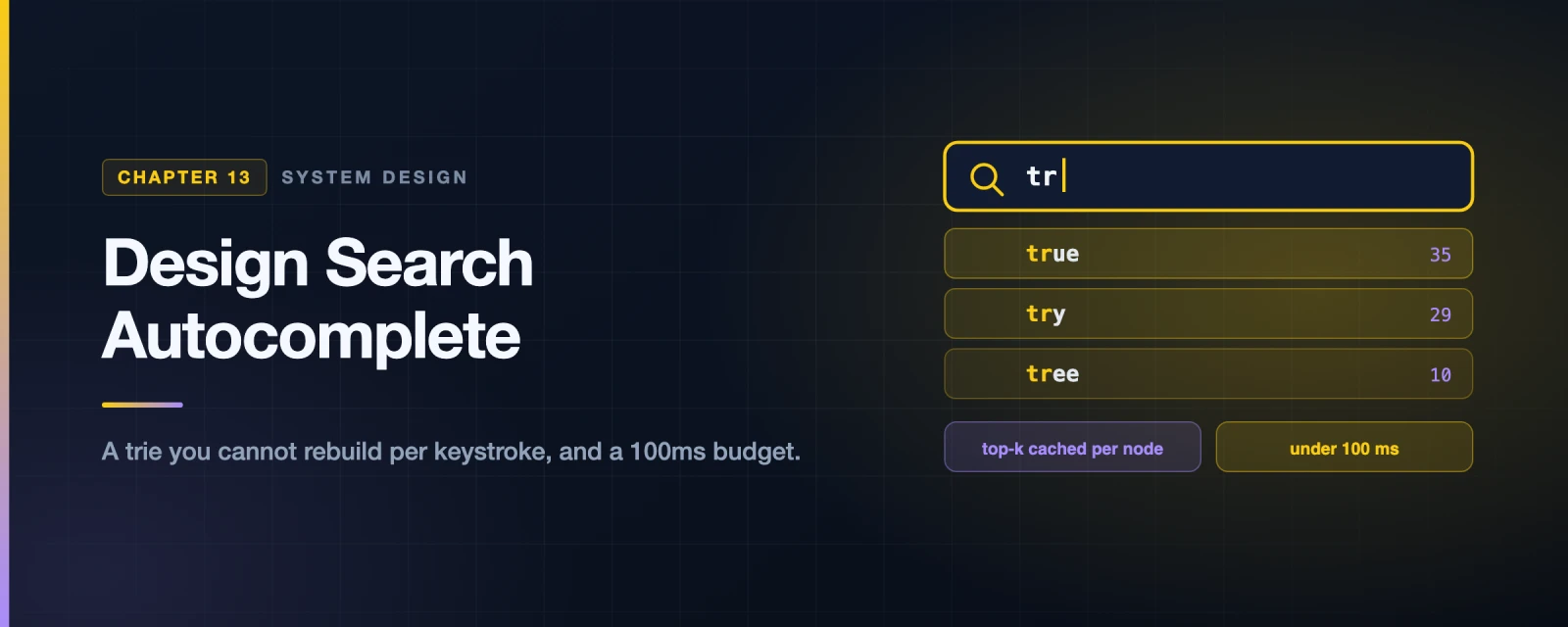
Design a Search Autocomplete System

Autocomplete looks like a lookup. Type a prefix, return matching strings, sort by popularity. A LIKE 'tr%' query and an ORDER BY.

Two facts destroy that:

It runs on every keystroke. Not once per search — once per character. Typing “dinner” issues six requests. Across 10 million users that is roughly 24,000 queries per second for a feature nobody considers a feature.

The budget is about 100 milliseconds. Facebook’s typeahead team put the threshold there: slower and the suggestions visibly lag your typing, which feels worse than having none at all. That budget covers the network round trip, so the server has perhaps a few tens of milliseconds.

Continue reading »

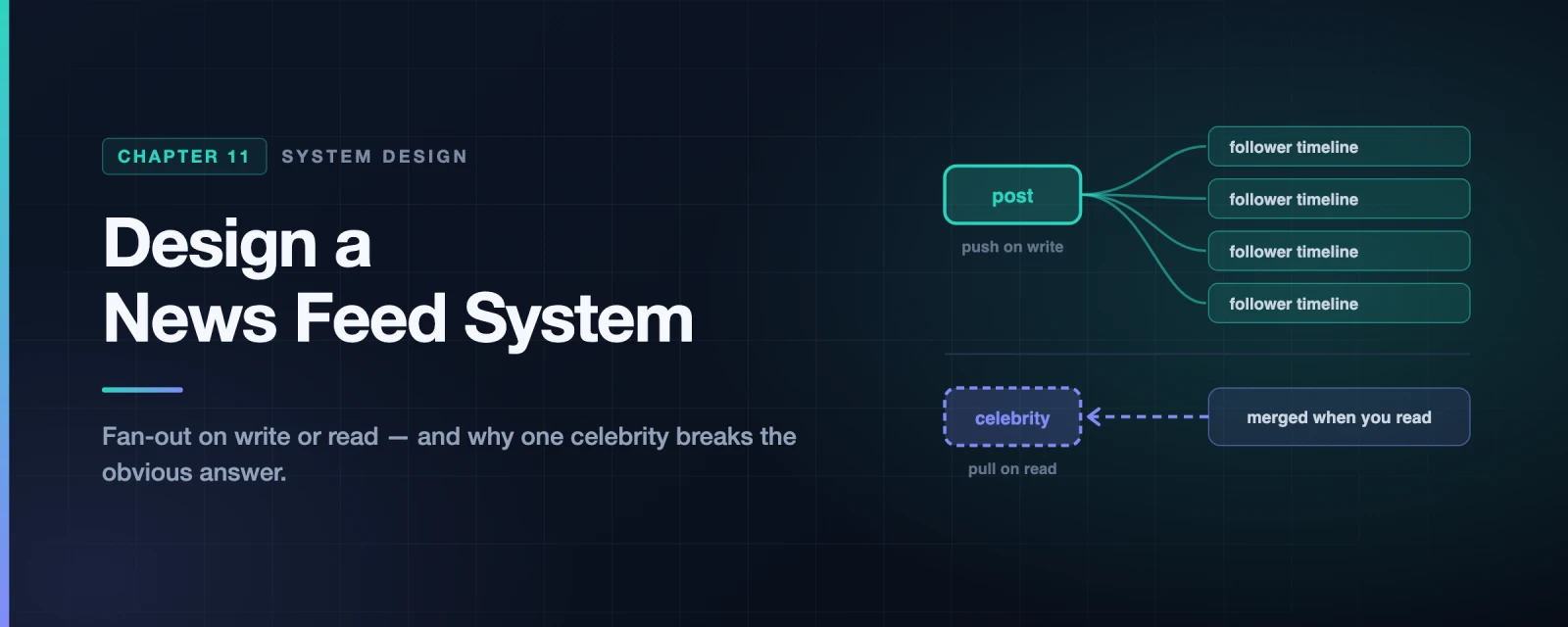
Design a News Feed System

Every social product has the same question at its centre, and it has exactly two answers:

Do you build a user’s feed when someone posts, or when that user opens the app?

That is it. Everything else — the caches, the queues, the graph database — follows from which side you pick. And the reason this is a great interview question is that both answers are wrong, in ways that only become visible when you do the arithmetic.

Continue reading »

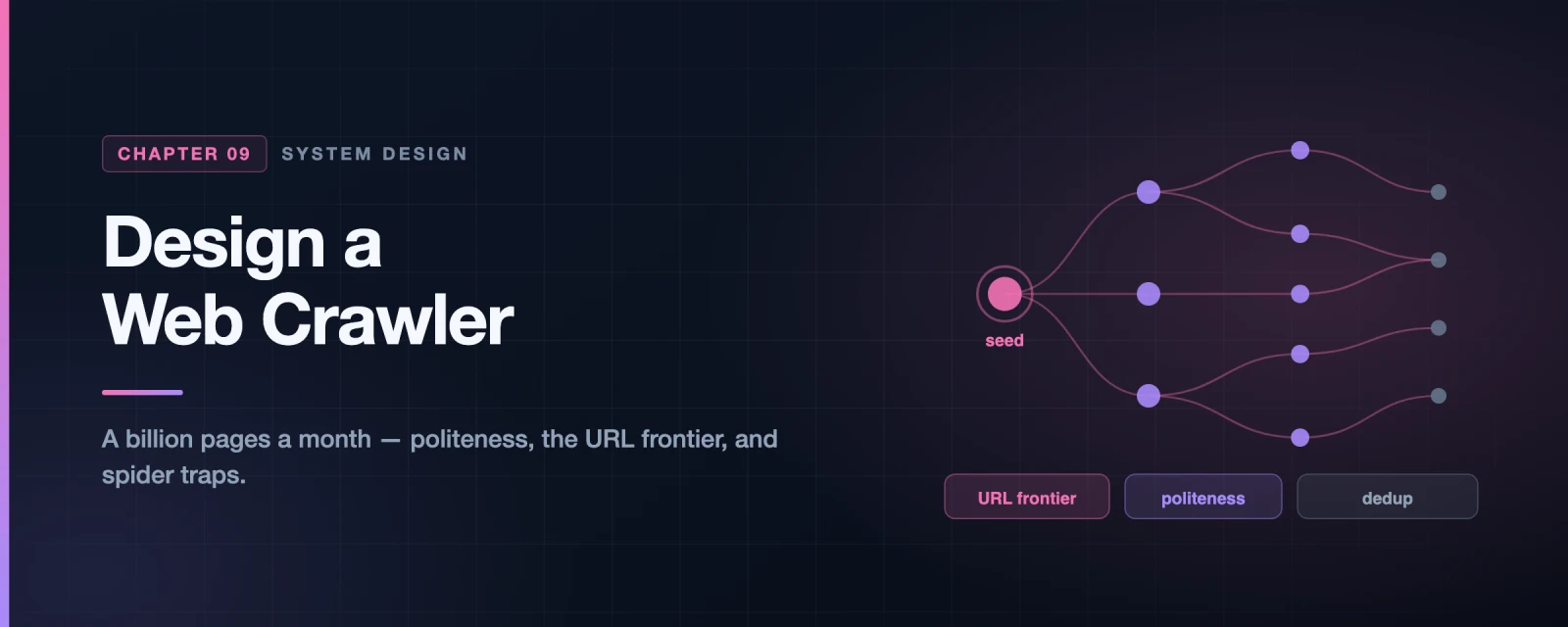
Design a Web Crawler

The algorithm for a web crawler fits on a napkin:

  1. Take a URL off a queue.
  2. Download the page.
  3. Extract its links.
  4. Put the new ones back on the queue. Repeat.

Write that and you have a crawler. Point it at the open web and within about ten minutes you will have been rate-limited, IP-banned, trapped in an infinitely deep calendar page, and served the same article eleven times under eleven different URLs.

Continue reading »

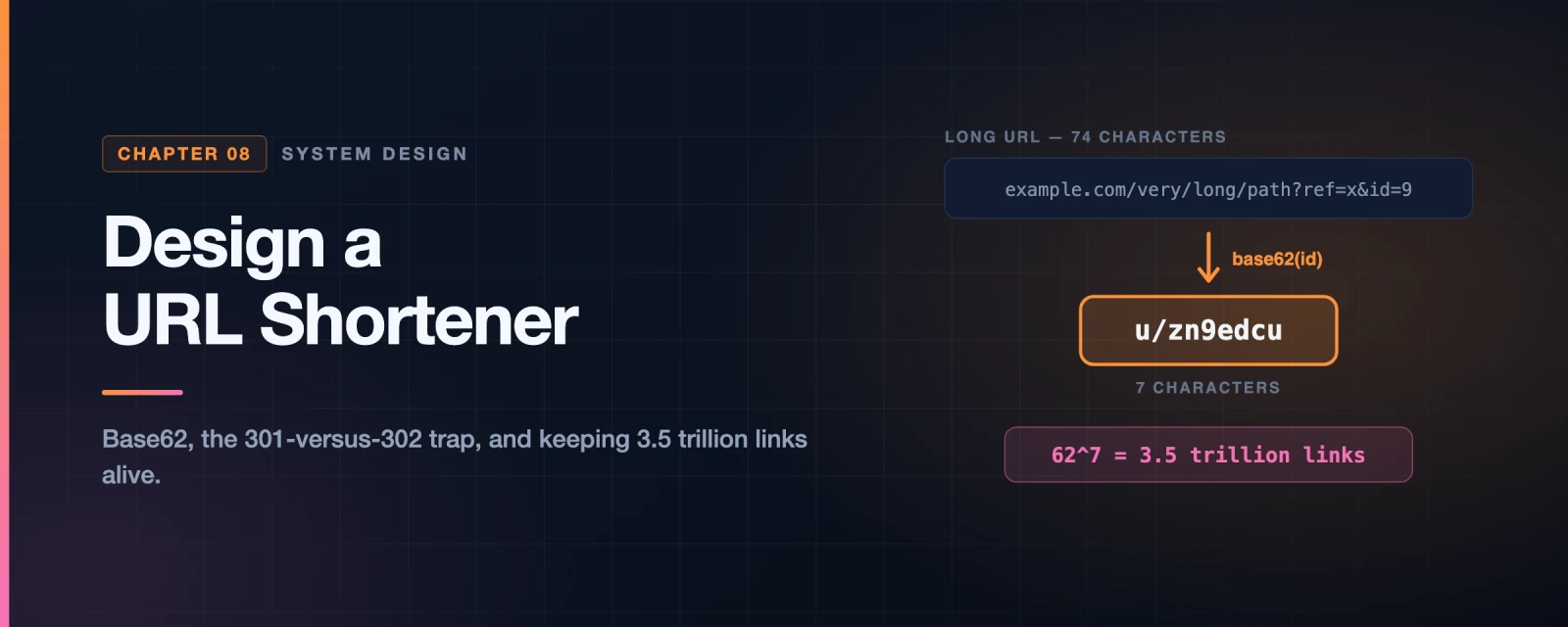
Design a URL Shortener

A URL shortener looks like the easiest system design question you will ever get. Store a mapping, hand back a short string, redirect. You could write it in an afternoon.

That is exactly why it gets asked. The naive version really is trivial — so the interview is not about whether you can build it. It is about whether you notice the four decisions hiding inside the triviality:

  1. How short can the code be? Not a guess — an arithmetic answer from the traffic estimate.
  2. How do you generate the code? Hash the URL, or encode a counter? They fail in completely different ways.
  3. 301 or 302? One of these silently destroys your analytics and makes links impossible to change. Most candidates pick it.
  4. What stops your service becoming a phishing tool? Every real shortener spends more engineering effort here than on the shortening.

We will build it properly, in the order an interviewer expects, and then cover the production concerns the textbook treatment leaves out.

Continue reading »

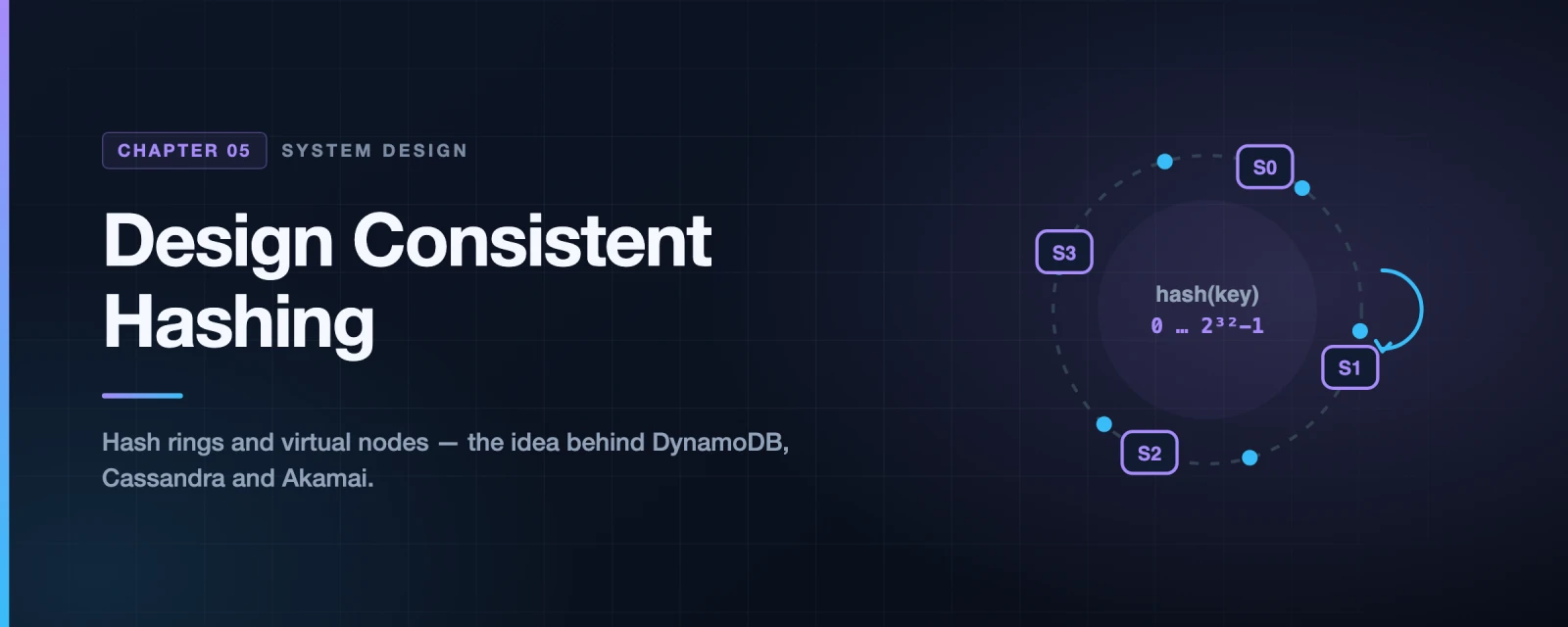
Design Consistent Hashing

Imagine you are the infrastructure engineer at a hot social media platform. Your system is humming along with 4 cache servers, each holding about 25% of your data. Life is good.

Then your platform goes viral overnight. You urgently add a 5th server. You restart everything. And suddenly, your database is on fire — every single cache server is getting a tsunami of cache misses. Users experience 10× slower page loads. The whole site is crawling.

Continue reading »

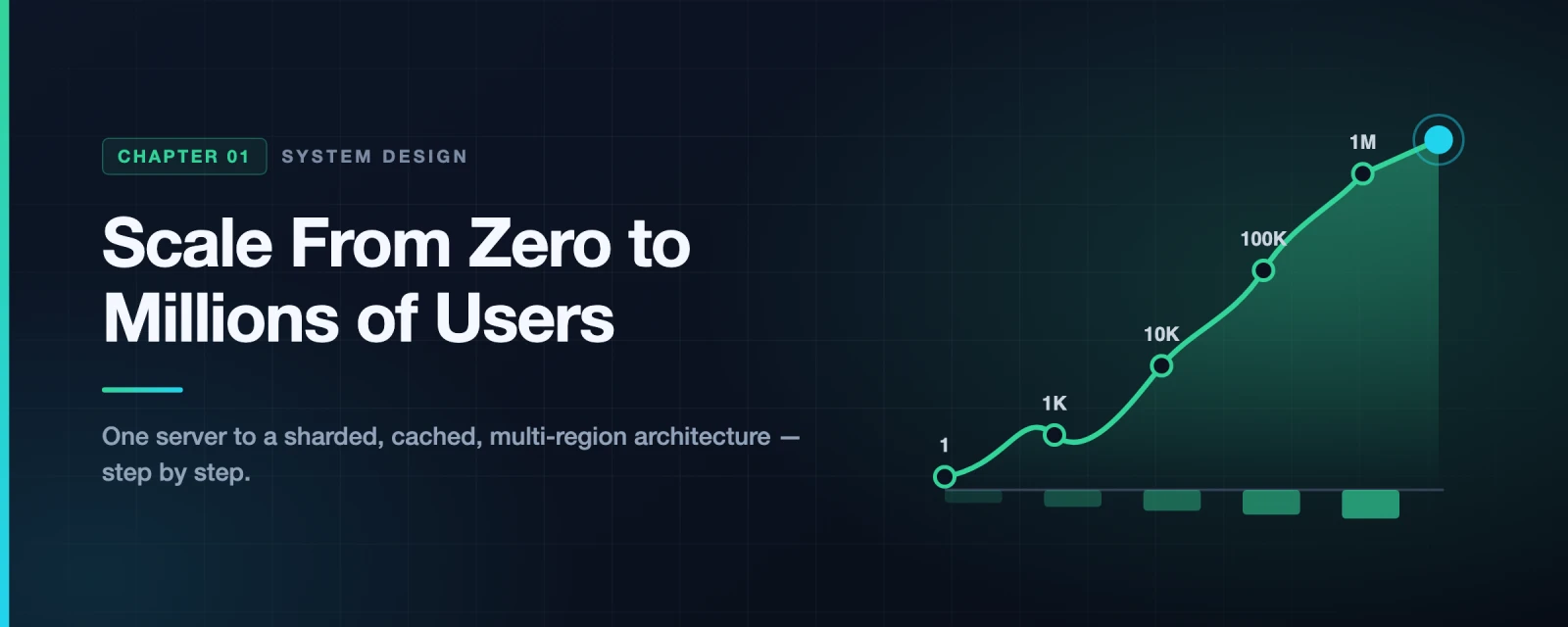
Scale From Zero to Millions of Users: A Complete System Design Walkthrough

Designing a system that supports millions of users is challenging — it is a journey that requires continuous refinement and endless improvement. In this post, we build a system that supports a single user and gradually scale it up to serve millions of users. After reading this, you will master a handful of techniques that will help you crack system design interview questions.

A journey of a thousand miles begins with a single step. Building a complex system is no different.

Continue reading »