Fundamentals

5 posts in this section

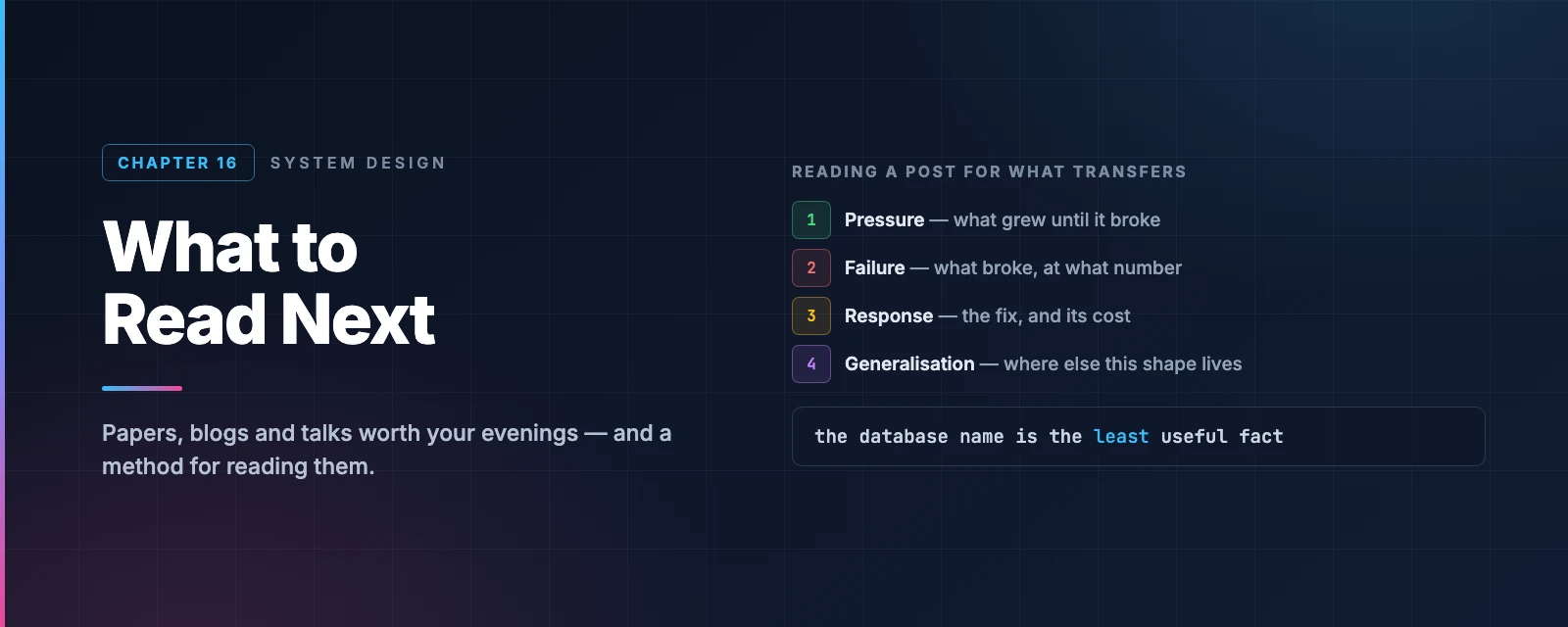
What to Read Next: Engineering Blogs, Papers, and How to Read Them

Twenty-eight designs down. So — what now?

The usual answer is a list of engineering blogs. Here is one, further down the page. But a list on its own will not make you better, and it is worth being honest about why.

Try this. Think of the last engineering post you read. Can you say what problem the team had, what number it broke at, and what the fix cost them?

Continue reading »
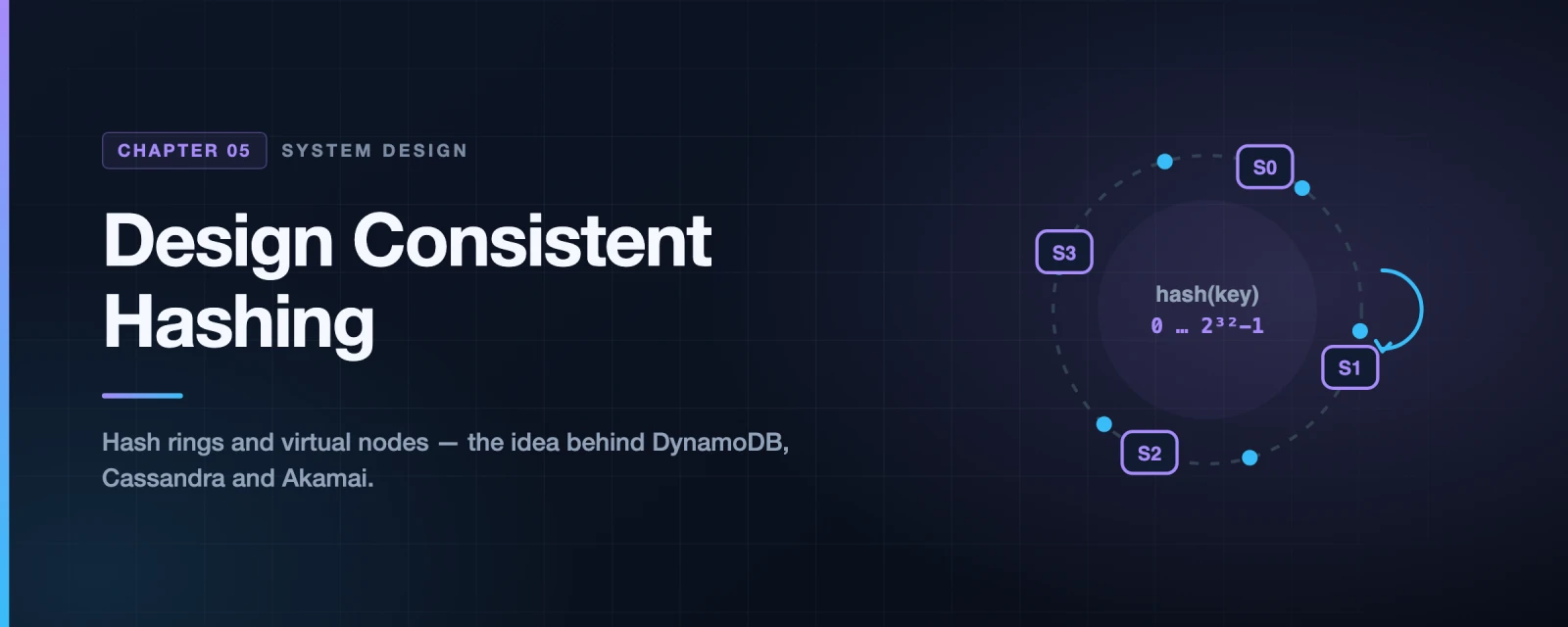
Design Consistent Hashing

Imagine you are the infrastructure engineer at a hot social media platform. Your system is humming along with 4 cache servers, each holding about 25% of your data. Life is good.

Then your platform goes viral overnight. You urgently add a 5th server. You restart everything. And suddenly, your database is on fire — every single cache server is getting a tsunami of cache misses. Users experience 10× slower page loads. The whole site is crawling.

Continue reading »

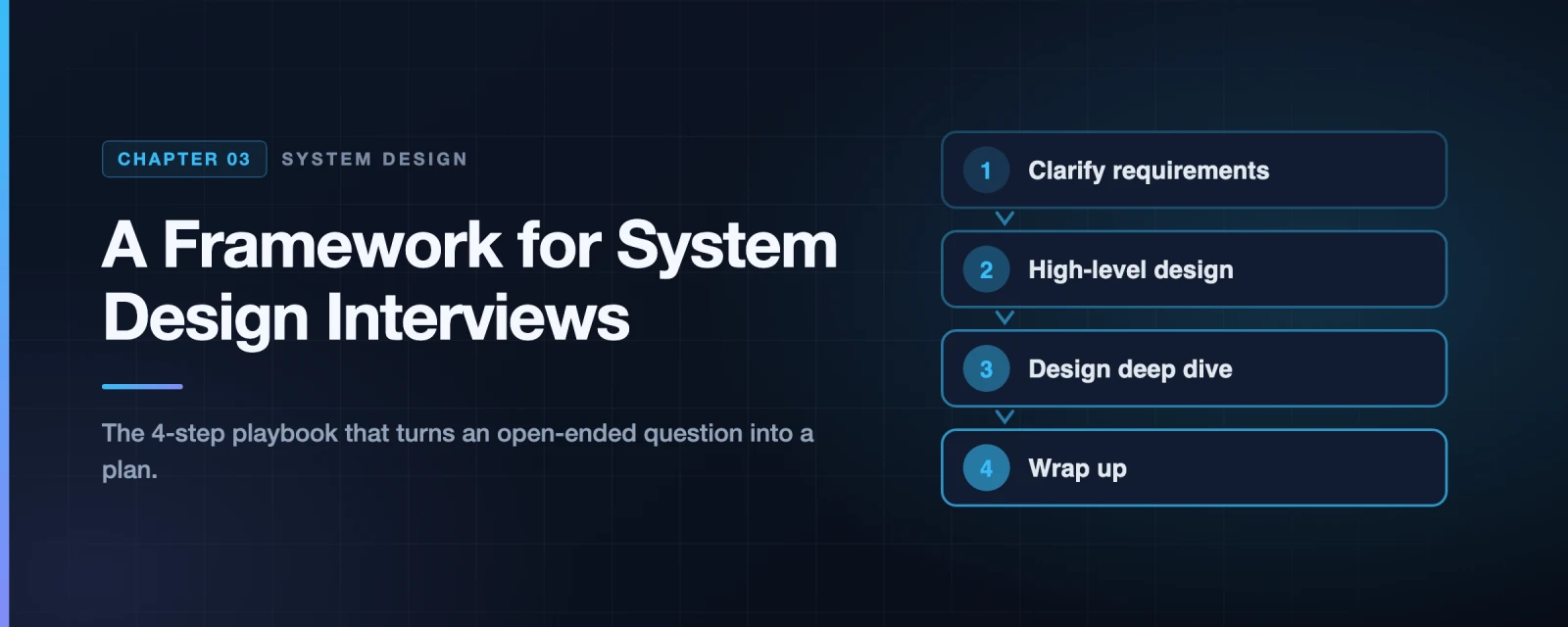
A Framework for System Design Interviews: The Complete Playbook

You just landed an on-site interview at your dream company. The schedule lands in your inbox. Most sessions look manageable — coding, behavioural, a hiring manager chat. Then you see it: System Design Interview.

Your stomach drops.

“Design Twitter.”
“Build a URL shortener.”
“How would you architect YouTube?”

These questions feel impossibly broad. How could anyone design a system that took hundreds of engineers years to build — in 45 minutes? Here’s the secret that most engineers miss:

Continue reading »

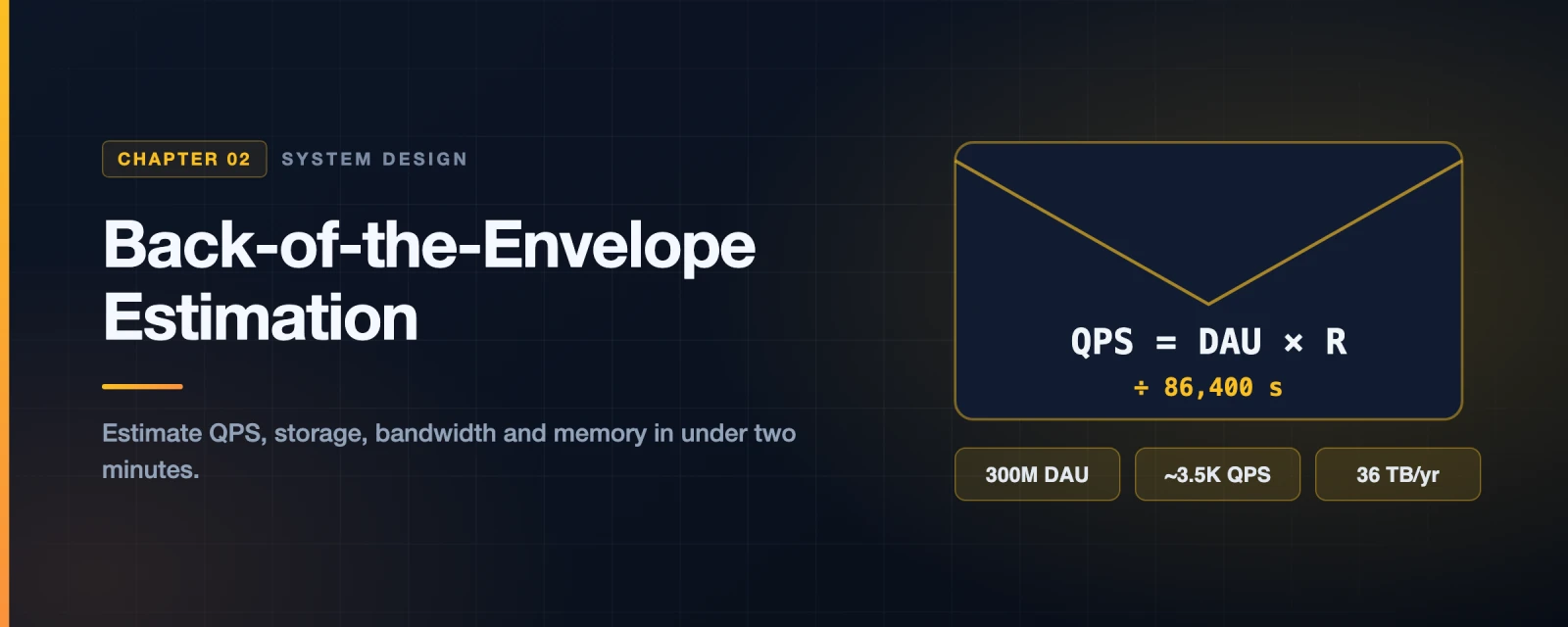
Back-of-the-Envelope Estimation: The Art of Making Smart Guesses

Imagine your interviewer says: “We’re designing Instagram Stories. How much storage do we need per year?”

Most junior engineers freeze. They don’t know where to begin. They feel like they need exact numbers — the real database size, the real compression ratios, the real usage stats.

Here’s the secret: you are not supposed to be exact. You are supposed to be directionally correct.

Back-of-the-envelope estimation is the skill of producing a reasonable answer in 2–3 minutes using simple math and a handful of memorized numbers. Google’s Jeff Dean calls it:

Continue reading »

Scale From Zero to Millions of Users: A Complete System Design Walkthrough

Designing a system that supports millions of users is challenging — it is a journey that requires continuous refinement and endless improvement. In this post, we build a system that supports a single user and gradually scale it up to serve millions of users. After reading this, you will master a handful of techniques that will help you crack system design interview questions.

A journey of a thousand miles begins with a single step. Building a complex system is no different.

Continue reading »